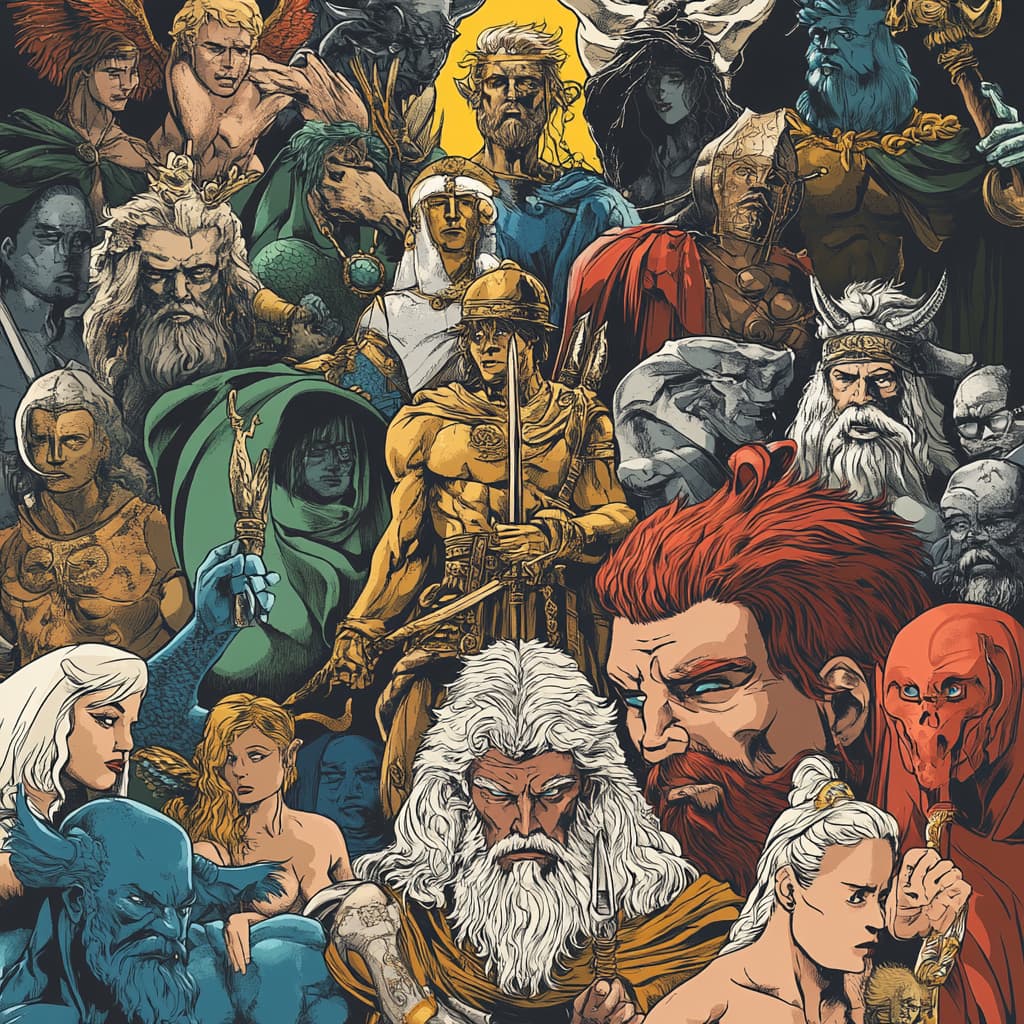
Since the dawn of civilization, humans have crafted stories of extraordinary beings—heroes, monsters, and mythical figures who shaped the world with strength, wisdom, or divine purpose. These archetypes, born from oral traditions, religious texts, and ancient mythologies, have transcended centuries, morphing into what we now recognize as modern superheroes.
Graphic novels and comic books have become the new mythological canvas of the 20th and 21st centuries. They draw from the same well of timeless human themes—good versus evil, sacrifice, transformation—but present them in stylized, visual formats that resonate with a digitally connected world. From the armor-clad Achilles to the invulnerable Superman, the thread is clear: we are still telling the same stories, just in new costumes.
The Universal Hero
Joseph Campbell’s seminal work, The Hero with a Thousand Faces, introduced the idea of the “monomyth” or hero’s journey—a narrative template that spans cultures and epochs. Ancient epics such as The Odyssey, Beowulf, and The Ramayana follow the same pattern that we see in today’s superhero sagas: the call to adventure, the crossing of thresholds, the confrontation with darkness, and the return with wisdom or victory.
Superheroes like Batman and Spider-Man follow these narrative beats to near perfection. Their personal tragedies (the death of Bruce Wayne’s parents or Uncle Ben’s demise) serve as the catalyst for transformation. They train, endure hardship, and eventually return stronger to protect society. These stories echo with mythic resonance, making them not only relatable but also archetypal.
Gods in Tights: The Mythological Roots of Superpowers
Many superheroes are, in essence, modern-day gods. Superman, with his godlike strength, ability to fly, and solar-powered invulnerability, bears striking resemblance to Helios or Apollo. Thor, one of Marvel’s most recognizable characters, is directly lifted from Norse mythology, complete with hammer and thunderous might.
Wonder Woman’s origin is explicitly rooted in Greek myth, as she is a daughter of the Amazons and molded from clay by Hippolyta. Even lesser-known heroes often mirror ancient deities or folklore figures from various cultures.
This direct borrowing is no accident. Mythology is filled with characters who serve as metaphors for human ideals and fears. When comics began to rise in popularity during the 1930s and 40s—times of war, depression, and social upheaval—they filled a spiritual vacuum with visual gods who fought injustice, protected the vulnerable, and inspired hope.
The Shift from Perfection to Humanity
However, while the ancient heroes were often born divine, today’s superheroes are deeply human. They struggle with doubt, identity, trauma, and ethical ambiguity.
Take Iron Man. Unlike a demigod, Tony Stark is a man of science, plagued by hubris, addiction, and guilt. His strength comes not from divine favor but from intellect and redemption. Likewise, Marvel’s X-Men reflect fears of marginalization and bigotry—more a reflection of societal struggles than divine battles.
This evolution speaks to the modern need for relatability. While ancient legends sought to uplift and inspire through unattainable perfection, today’s audiences want flawed heroes who learn, adapt, and fail—just like us.
Global Myths in the Superhero Age
The superhero genre has also become a platform for reinterpreting and amplifying global myths. Characters like Black Panther, rooted in Afrofuturism, blend traditional African cultural elements with futuristic aesthetics. Kamala Khan (Ms. Marvel) integrates Pakistani-American identity and Islamic culture into the superhero genre.
These representations mark a crucial expansion of the narrative landscape. Superhero stories no longer center only on Euro-American legends but engage with broader cultural mythologies, allowing new voices to participate in reshaping the modern pantheon.
Graphic Novels as the New Mythbooks
Much like the illuminated manuscripts and oral traditions of the past, graphic novels now serve as powerful storytelling tools that blend image and text to forge lasting cultural narratives.
Titles like Sandman, V for Vendetta, or Watchmen explore philosophical and political themes while invoking archetypal elements. Characters become symbols—of freedom, repression, chaos, order—taking on mythic significance. These are no longer just stories about punching villains; they are meditations on society, identity, and moral complexity.
Unlike static mythologies, graphic novels allow continual reinterpretation. Batman has been retold a dozen ways, from campy to tragic. Each version adds a layer, reflecting the era’s fears and desires. In this way, superheroes are not fixed characters but evolving mythic vessels.
Why Superheroes Endure
One might ask: why, in a world filled with scientific understanding and technological advancement, do we still crave stories of capes and masks?
The answer lies in the symbolic function of myth. Myths help us understand our place in the universe, provide moral templates, and offer escape and catharsis. Superheroes are our cultural coping mechanism. They provide clarity in a world that often feels chaotic.
In times of crisis—be it war, political turmoil, or global pandemics—superhero narratives surge. They give us idealized visions of justice, resilience, and transformation. Whether it’s Captain America standing up to tyranny or Miles Morales grappling with dual identity, these stories resonate because they speak to the timeless need for meaning and hope.
From Paper to Screens: The Modern Olympus
The rise of cinematic universes like the MCU and DCEU has taken superheroes from paper to global phenomena. These characters are not just stories—they are industries, merchandise, icons.
This mass adoption parallels how ancient myths were embedded into all aspects of culture—from religion and education to civic identity. Today, superhero symbols appear on everything from billboards to lunchboxes. They inform fashion, music, even political discourse.
Critically, this saturation brings both opportunity and responsibility. As these stories reach billions, their representation, inclusivity, and ethical messaging become ever more significant.
Conclusion: A New Age of Heroes
From the thunder of Zeus to the thunderclap of Thor, from Hercules to Hulk, the stories we tell about heroes have evolved but never disappeared. Superheroes are the continuation of myth by other means—a modern tapestry woven from ancient threads.
They reflect our fears and aspirations, mirror our dilemmas, and push us toward imagining what we could become. Whether in ink, pixels, or film, their endurance proves one thing: the human need for heroes will never fade.
As we continue to write, draw, and dream, one truth remains: every cape has a myth behind it—and every myth begins with the question, “What if someone could save us?”
